You want to get out there, travel light, and truly enjoy the trail. This guide will help you avoid common pitfalls and choose your setup so that your tour remains relaxed, safe, and fun. Everything is based on practical experience – with specific recommendations from our rental range of outdoor equipment, which you can test before you buy.
Realistic planning that allows for flexibility along the way
Start with stages you're confident you can complete and build in some buffer time. Elevation gain is more important than distance, wind saps energy, and gravel slows you down. Plan alternative destinations, such as a previous campsite or train station. Download maps offline beforehand and mark water sources, supermarkets, and shelters. This way, you can focus on what bikepacking is all about: the scenery and your flow.
Comfort on the bike begins with the fit.
Your saddle, handlebars, and pedals should fit you perfectly. Adjust the saddle height so that your knee is slightly bent at the bottom of the pedal stroke. Rotate the handlebars so your shoulders remain relaxed. Check the tire pressure on your loaded bike and adjust it according to the terrain and load. Slightly lower pressure provides better grip on gravel, while too little pressure causes pinch flats. Take your time to make these adjustments before your ride – ten minutes of fine-tuning can save you hours of discomfort on the road.
Packing logic: Thinking through the day from the outside.
Order is ease. Heavy items belong in the center and low on the bike, frequently used items at the front. In practice, this means: rain jacket, buff, gloves, snacks, and power bank in the handlebar bag; stove, spare clothes, and sleeping bag further back. Pack everything modularly in waterproof bags, color-coded by category. This way, you'll find what you need in seconds in the rain and set up camp faster in the evening.
Bags that deliver on their promises
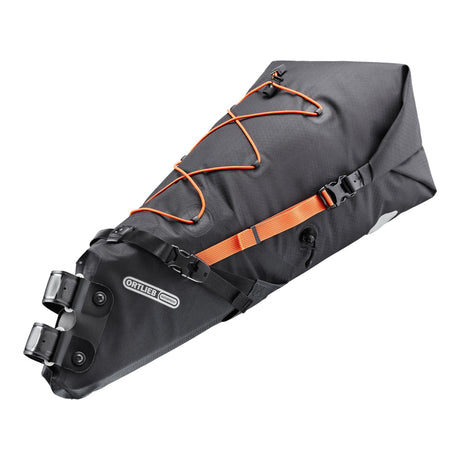
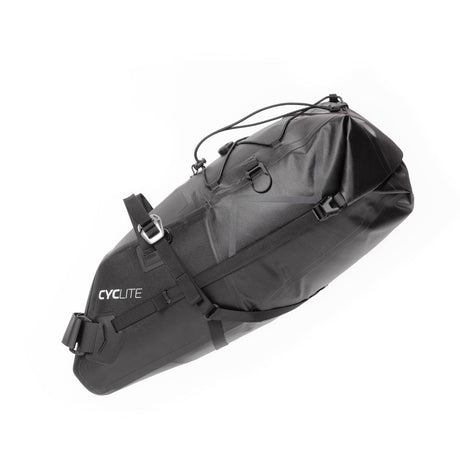
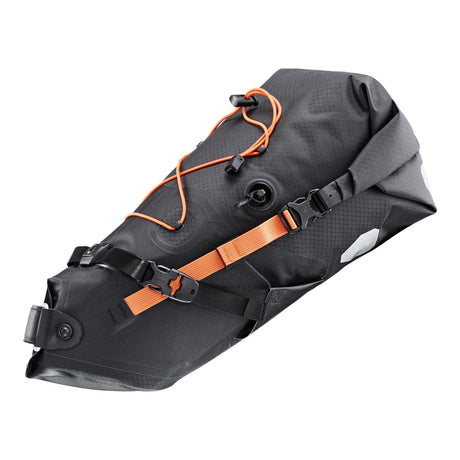
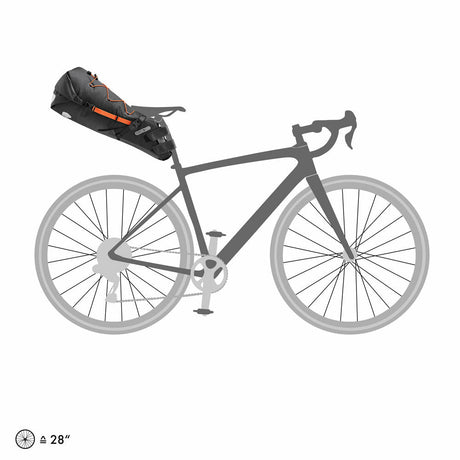
Tried-and-tested systems pay off. For the saddle roll, the Apidura Expedition Saddle Pack is robust, lightweight, and stable. At the front of the cockpit, the Apidura Expedition Handlebar Pack provides space for a sleeping bag or tent. If you prefer click-mount systems, the Ortlieb Handlebar-Pack QR 11L is a solid solution for quick removal during breaks. For long, narrow items, use a frame bag; this keeps the bike tracking straight and prevents your feet from bumping against anything.
Sleeping: lightweight, windproof, quick to set up
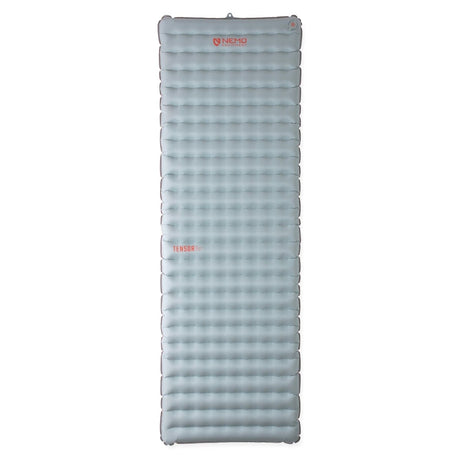
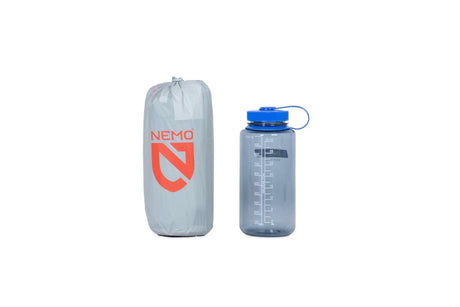
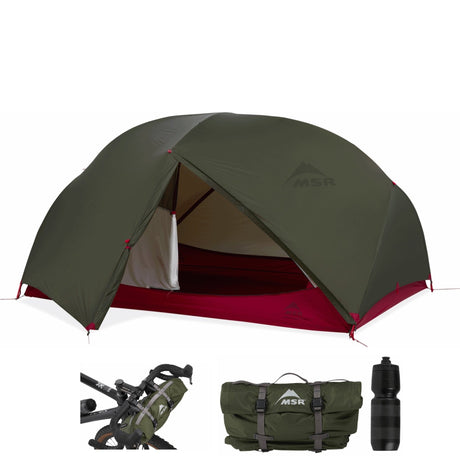
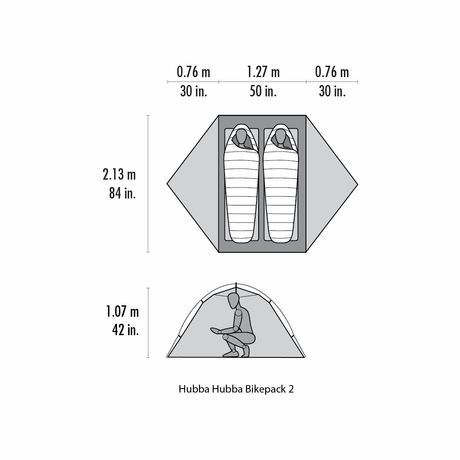
Your sleeping setup determines your mood in the morning. For two people, the NEMO Dragonfly OSMO Bikepack 2P is a favorite: small pack size, quick setup, good ventilation, and a frame that fits the handlebars. On cold ground, warmth is only retained with a suitable sleeping mat. When it gets chilly, the NEMO Tensor Extreme Conditions will keep you reliably warm. For frosty nights, the Mountain Equipment Glacier 1000 provides the necessary reserve.
Practical tip: Try the entire assembly process at home in the dark. You'll immediately notice which steps you want to simplify.
Clothing: Layering system without the drama
Plan your layers so you can put them on and take them off with one hand. A thin windbreaker saves a surprising amount of energy on descents. Pack a warm insulating layer for breaks, dry socks for the night, and a light buff to protect against drafts. Keep sleepwear separate for packing in your sleeping bag; this way you'll get into your sleeping bag dry and prevent moisture from getting into the filling.
Food and drink: Energy in small, regular waves
Eat early and often, before hunger sets in. A hot breakfast boosts morale, especially on wet days. Compact cooking solutions from our Stoves & Cooking Systems category give you independence. Plan your water needs conservatively and expect to use two to three liters a day – more in hot weather. Mark wells and shops along your route, refill early, and take a lightweight water filter setup if you're traveling off the beaten track.
Weather management: stay dry, sleep dry
Keep your rain jacket and gloves within easy reach. Use short, dry windows for ventilation and drying. Pack your sleeping bag and spare clothes in double waterproof bags. Place a thin foam or emergency blanket under your sleeping mat if the ground is very cold. Ventilate the tent briefly before going to sleep and again first thing in the morning to prevent condensation from becoming damp.
Navigation: digital first, analog always
Use two apps with offline maps and keep a paper map as a backup. Conserve power by using airplane mode and a brighter display, and recharge at every stop along the way. Pack a small power bank in the cockpit so you can charge it while riding. Mark "bail-out" points for sudden weather changes or breakdowns – knowing where a train station or bus is will take the pressure off the leg of your journey.
Breakdown safety: Small parts with a big impact
Two inner tubes, a puncture repair kit, a mini pump, a multitool with chain tool, a quick link, wide tape, cable ties, and a small bottle of chain oil can save you on a trip. Before setting off, check that the panniers aren't rubbing against the tires and that all cockpit screws are tight. Don't skimp on the straps: properly tensioned, secured with tape, and you'll roll silently.
Test drive: the most important hour before the start
Fully load your bike and ride a 30-40 kilometer loop with some elevation gain. Practice starting on hills, navigating potholes, braking, and dismounting. Set up your tent once, boil water, and pack up again. Every lesson learned here will save you energy and stress on your tour.
Making sustainable choices: Renting as a shortcut to the right setup
Want to see if a tent, sleeping bag, or bag is right for you? Then rent outdoor gear for your trip. Renting lets you test handling, durability, and pack size in real-world conditions without having to buy right away. If everything fits, our motto is: rent first, buy if you like it . Browse our selection of panniers , tents & tarps , sleeping mats , and sleeping bags – all cleaned, inspected, and ready for your adventure.
Example setups for typical tours
A weekend on easy gravel roads requires a small tent, a thin sleeping mat, a saddle roll, and a compact handlebar bag. A week-long tour in the Alps demands more warmth, a windproof tent, an extra mid-layer, and a larger frame bag to keep the handlebars clear. High chance of rain? Pack overgloves and dry sleeping gear. The more realistically you pack, the more carefree your tour will be.
Conclusion: Fun arises from preparation, balance, and scope.
When your route, bike setup, and sleeping system are perfectly coordinated, bikepacking feels effortless. You roll along, stop, enjoy the ride, and have plenty of energy reserves for unexpected moments. Plan conservatively, pack modularly, keep your gear dry – and use rental options to find your perfect setup. This way, your bike trip will be exactly what you want: free, flexible, and full of joy.
FAQ: Frequently Asked Questions about Bikepacking
How many kilometers per day are realistic?
Plan for a shorter distance than your training target. Terrain, wind, and breaks will slow you down. 60–90 kilometers on mixed terrain is a good starting point for many.
How can I keep my weight down without getting cold?
Choose a wind-stable, lightweight tent, a sleeping mat with a sufficient R-value, and an insulating jacket for breaks. Fewer, but high-quality layers are better than many heavy items.
How can I pack cleverly in the rain?
Modular design with waterproof bags. Dry layer separate, sleeping bag doubly protected. Rain jacket and snacks easily accessible at the front, so you don't have to unpack.
Can I test equipment before I buy it?
Yes. At Eddy's Adventure you can rent equipment, gain practical experience and buy it if you like it – rent first, buy if you like it .